Increasing the influence of
design, within a retail broker
How I built, galvanised & up-skilled a trading-focussed product design team — earning design a seat at the table on product strategy.
A design team with an opinion
After a few months of operation, we saw notable improvements: every team member understood the core concepts of IG's product suite, the quality & relevance of design ideas began to improve, and tangible improvements in project outcomes began to appear – including: increasing ave. trades by 19.5%; increasing engagement by 7.7%; the reduction of losing trades by 3%; and an increase of conversion by 25%.
+ Design voice
+ Team motivation
+ Product understanding
Improved PM & SME relationships
Increased influence on product roadmaps
Critical contribution to improved customer outcomes
Product design had little influence over solution definition, often following direction from subject matter experts (SMEs) or product managers (PMs) — product and customer understanding was shallow and sporadic, isolated to a single principal UX designer.
Increase the voice and influence of design — to elevate the team's technical understanding of our core products & customer behaviours, and ultimately raise the quality and impact of the solutions generated.
Key constraints
A re-org of existing team members, the wider org. structure, and the resource available compared to the breadth of customer touchpoints we needed to cover.
Most designers aren't traders
It's hard for design to have a meaningful voice & influence on product strategy, without an in-depth understanding of the organisation's products & customers — customer perceptions, motivations & needs.
How can designers build this understanding, when the products are complex and relatively unrelatable & inaccessible? Leveraged trading is high risk & requires significant amounts of spare cash.
Knowledge
Understanding of customer behaviour was sporadic & shallow. Design crits were painful & inefficient — feedback was often superficial.
Confidence
Designers felt huge uncertainty when designing solutions, lacking a clear sense of what was — and wasn't — important, and why.
Reliance
Over-reliance on SMEs & stakeholders. Design had become purely executional, with solutions largely defined by commercial stakeholders through long lists of tech. requirements, with little consideration for the underlying customer need.
We needed to understand customers well enough, in order to be able to anticipate their needs
To think, feel, see & do, like traders — first hand.
It didn't take me long to realise, that I had to learn to trade
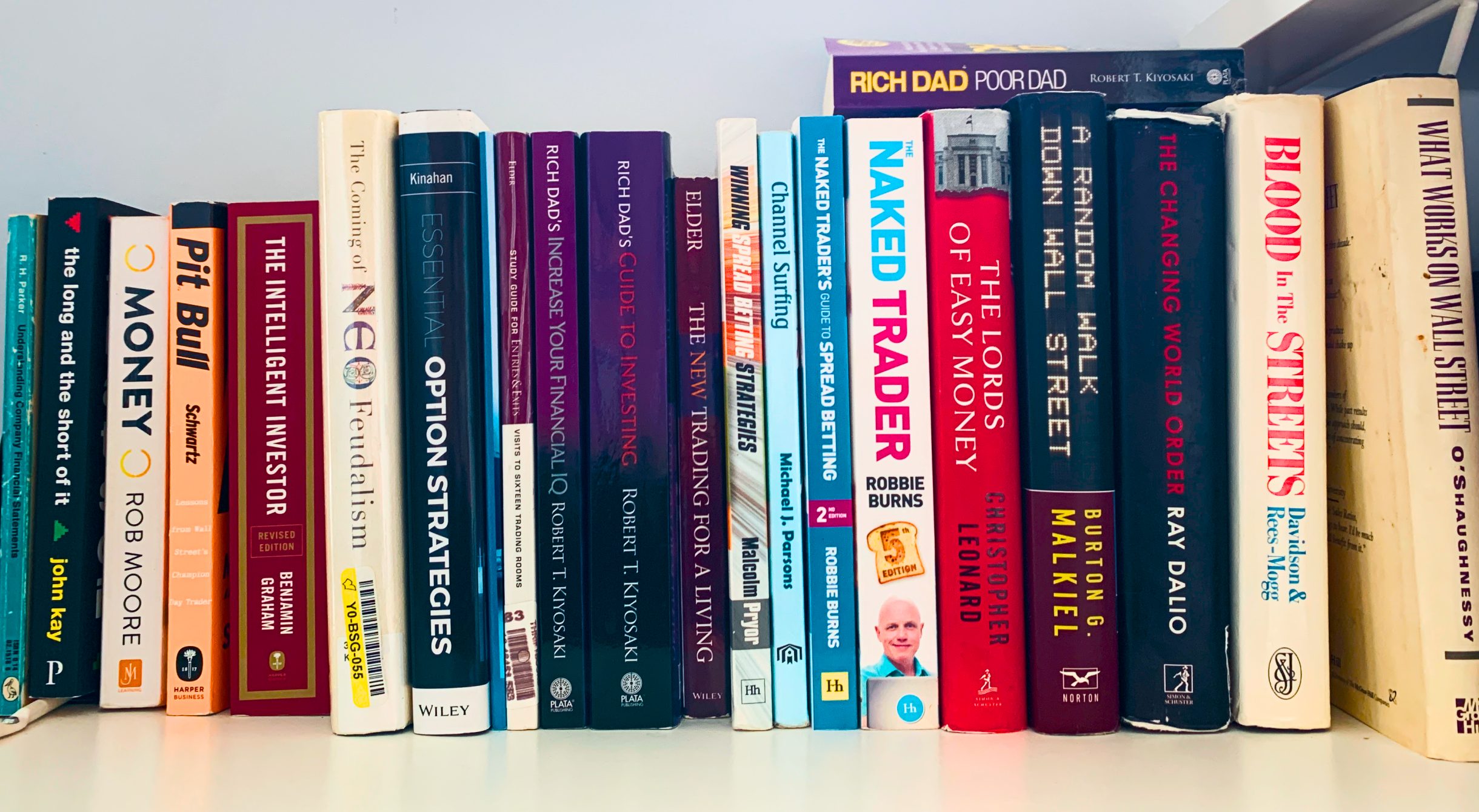
It sounds simple – but took over a year to build confidence. I invested my first bonus, took a trading course, studied, read a lot of books; and slowly began to demystify the process.
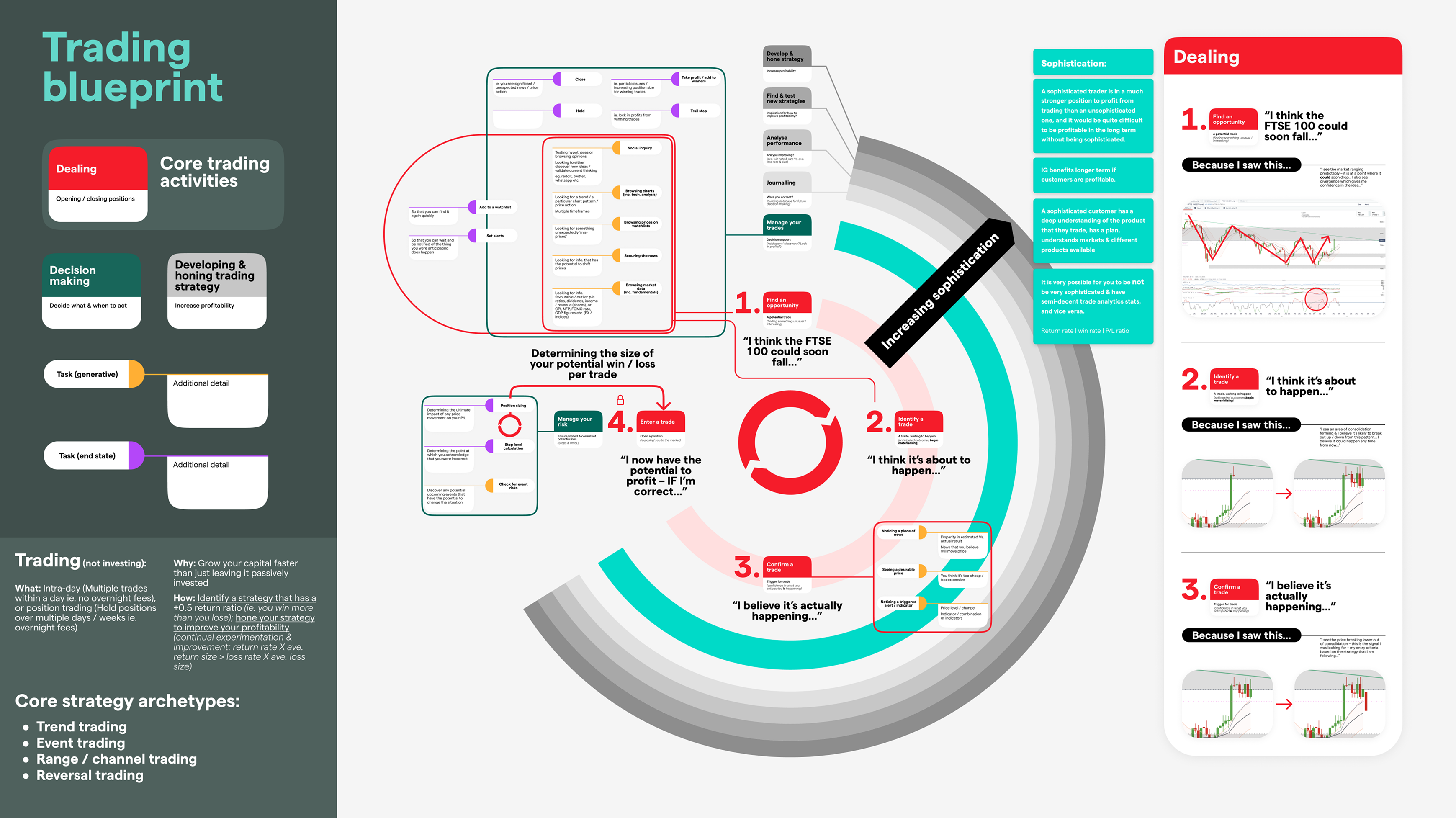
I captured my understanding in a trading blueprint: a detailed map of how traders trade – a complex web of circular decision-making, not a linear flow. I validated it with senior stakeholders & subject-matter experts until it held up.
The 'Trading experience' team
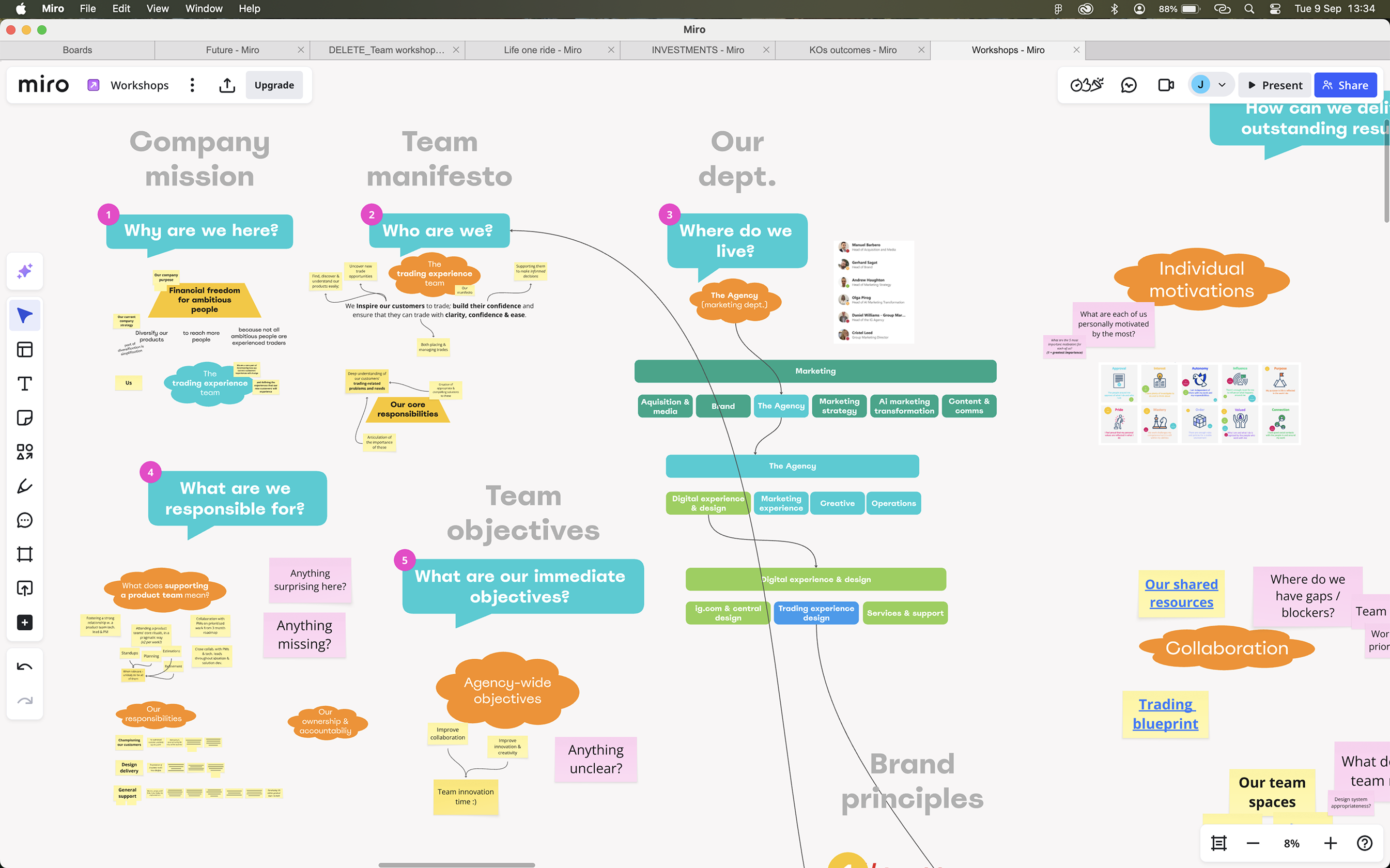
I took the opportunity to lead a newly formed team, with a sole focus of designing trading journeys, within IG's trading platform. I facilitated workshops to agree our mission, write our team manifesto & answer the basics — who we are, what we do & why.
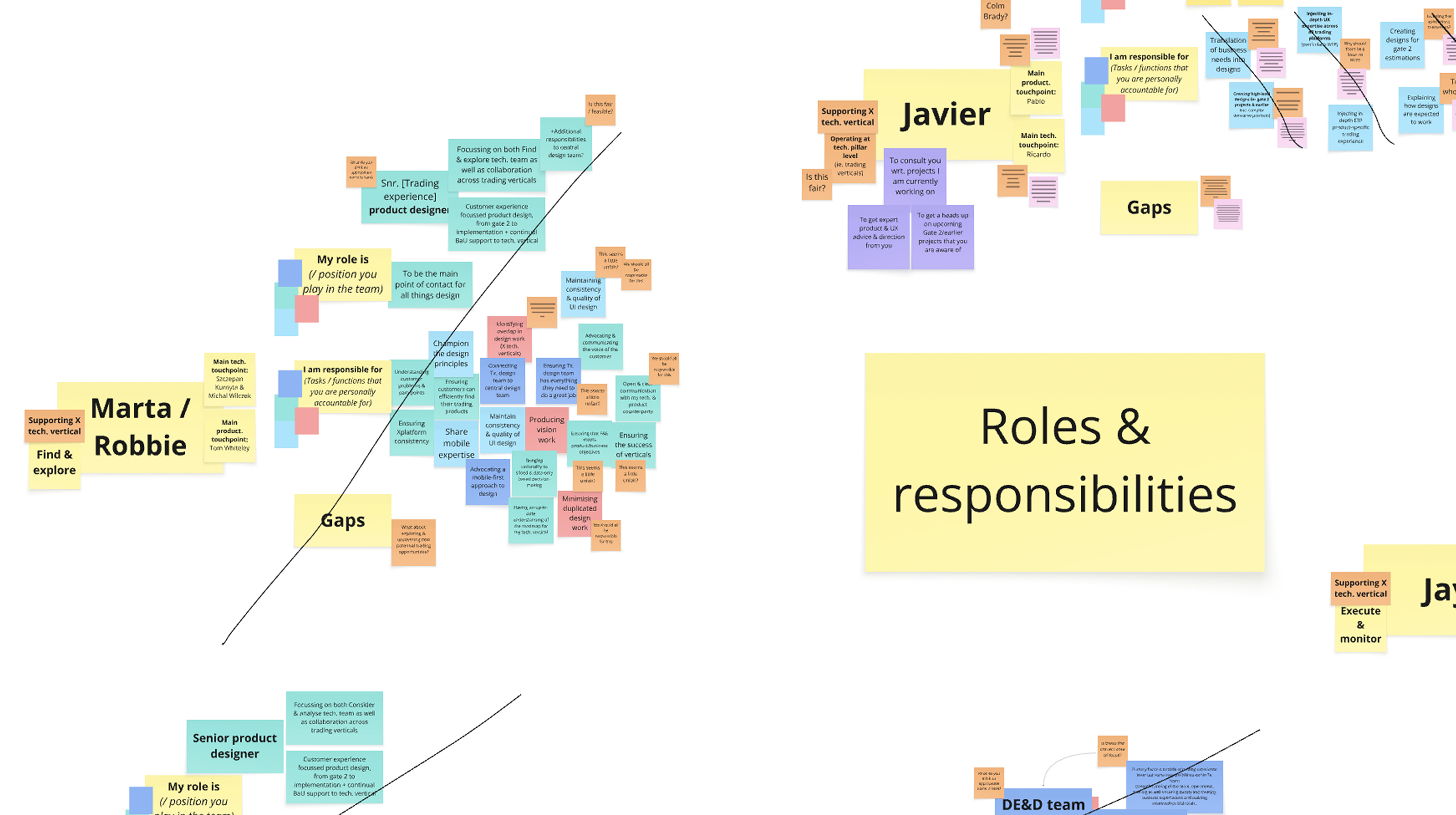
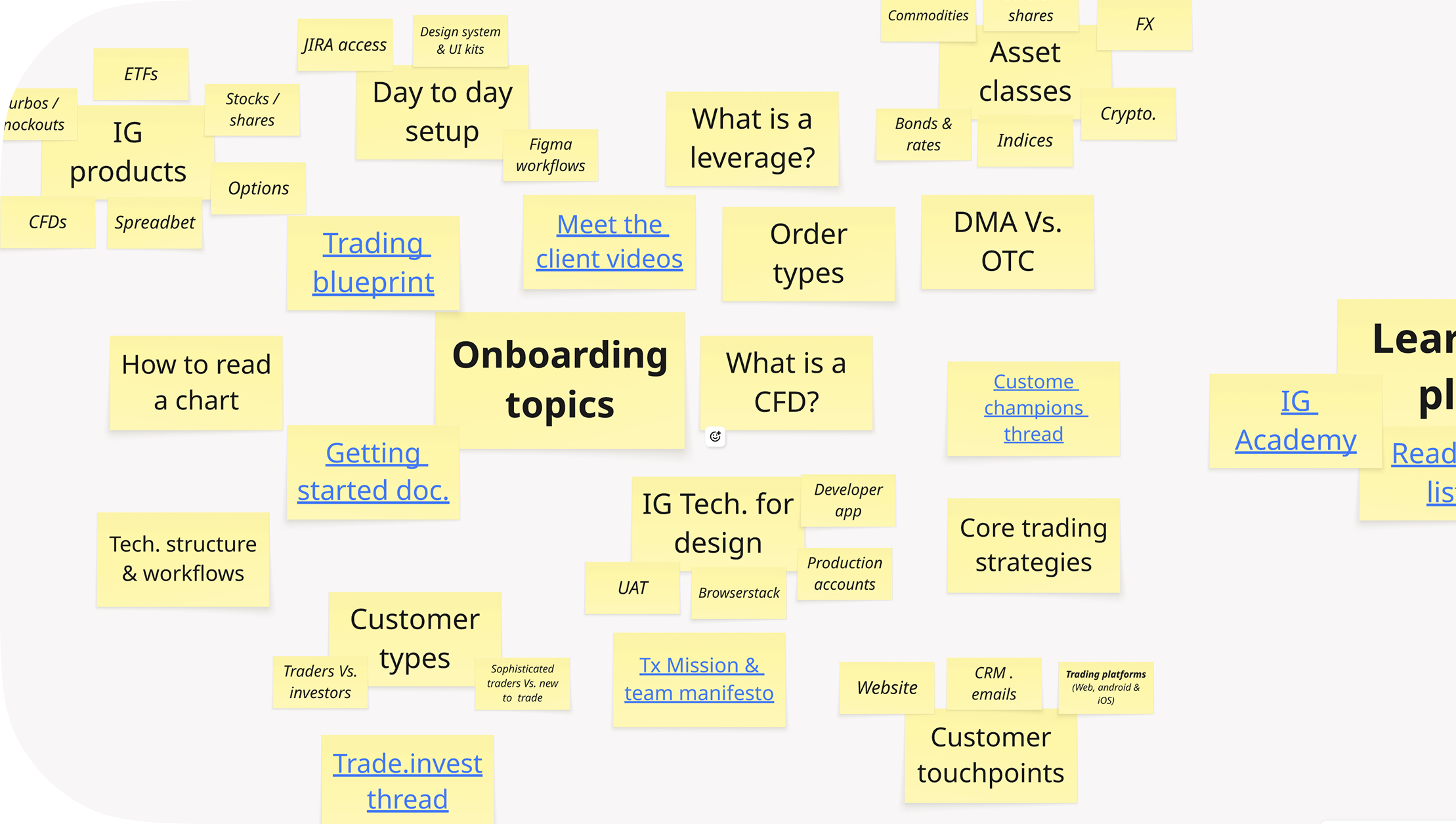
We mapped roles & responsibilities across the team, and I built a structured onboarding programme so every new designer that joined could ramp up on trading fundamentals.
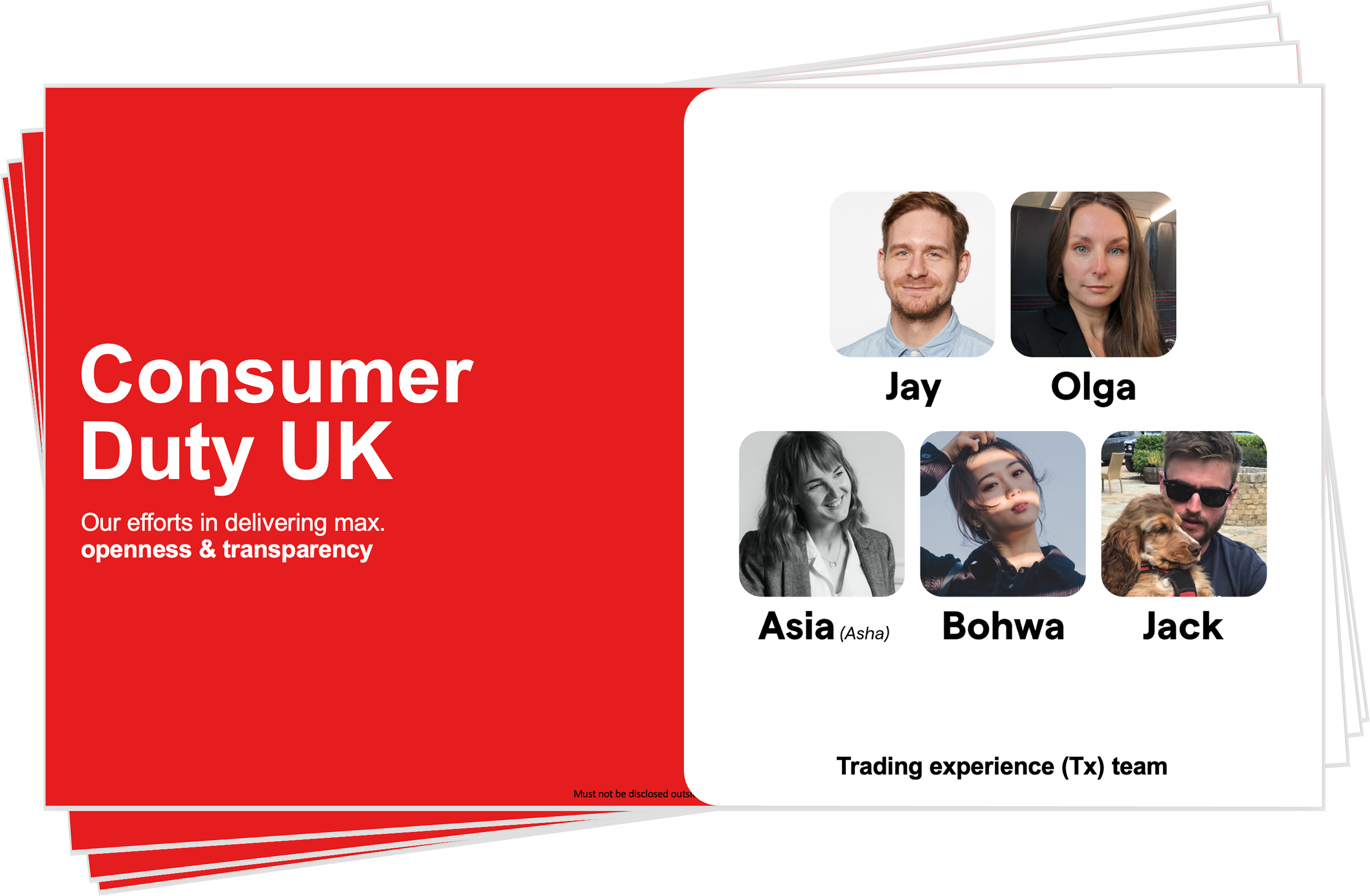
Ensuring individuals' exposure through monthly showcases, helped build the confidence of designers, as well as confidence in them, from key stakeholders & the wider org.
Rebuilding the design crit
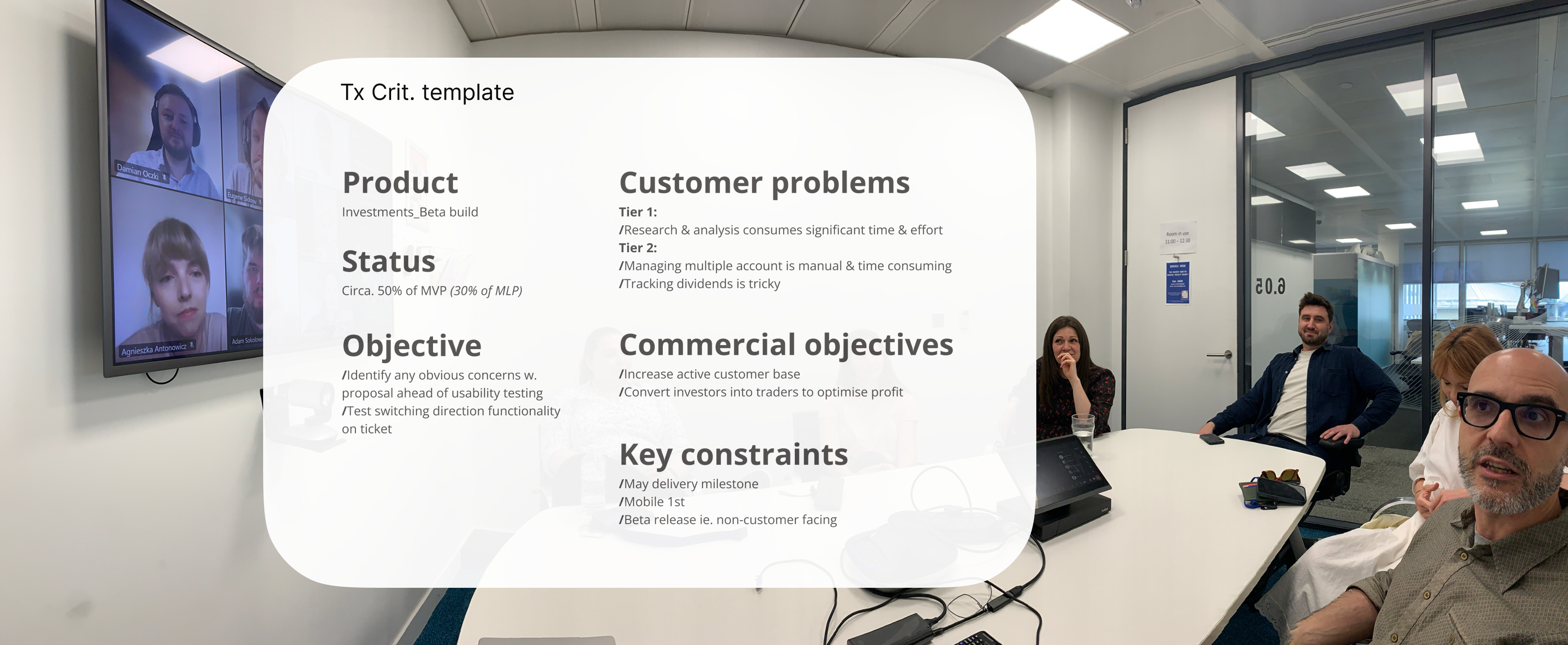
Crits had been painful & inefficient – it took too long to share context & build the required product expertise. Everyone in the room had the essential product knowledge, and I introduced a structured crit. template – focussing on the customer problem, and extracting from the commercial objective. The quality of input increased; feedback & actions were delivered faster.